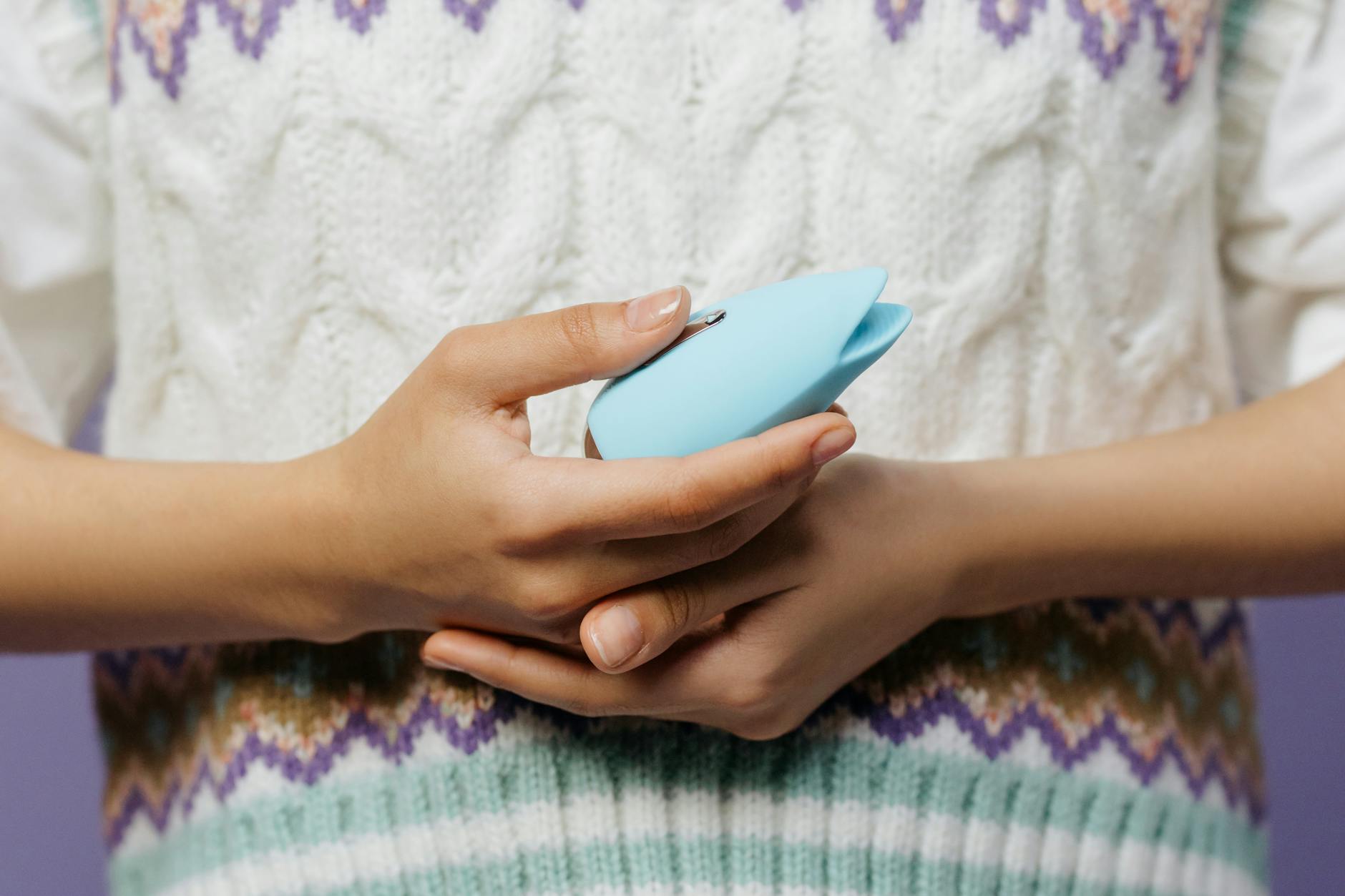
Let's name the problem first
You got a vibrator. Everyone said it would change your life. You tried it, and... nothing. Or worse, something weird. A buzzing sensation that feels disconnected from actual pleasure. Your hand works fine. Manual touch has texture, pressure variation, feedback. A vibrator sometimes just feels like a drone.
You're not broken. Your clitoris isn't tired or "used to it." The gap between sensation and pleasure is real, and it's fixable.
Why vibrators sometimes feel like nothing
Three things are probably happening at once.
First, you're comparing vibration to manual stimulation, which is fundamentally different. Your fingers vary pressure, rhythm, and angle constantly. A vibrator does one thing: vibrate. Your nervous system might not recognize vibration as "sensation worth paying attention to" if you've spent years building pleasure through dynamic, varied touch.
Second, you might be starting too strong. Many people assume that more vibration equals more sensation. Actually the opposite happens. High intensity can numb the very nerves you're trying to wake up. It's like turning the volume up so loud you stop hearing the music.
Third, you're probably not building enough anticipation. Solo pleasure is easy to rush. A vibrator can deliver sensation immediately, so the brain skips the warm-up phase where arousal actually builds. Sensation without arousal feels like static.
Start absurdly low
Get your lemon vibrator and use the lowest setting. Not "low." Lowest. Like, you're checking to make sure it's even on.
Don't use it on your clitoris yet. Use it on your inner thigh. Your forearm. Your chest. Your nipples. Let your nervous system figure out what vibration feels like in a low-stakes zone. Spend 2-3 minutes just exploring how it feels on different skin.
This does two things. It desensitizes your nervous system gradually (the opposite of numbing out) and it builds anticipation. Your brain starts to recognize vibration as pleasurable before you're asking it to deliver an orgasm.
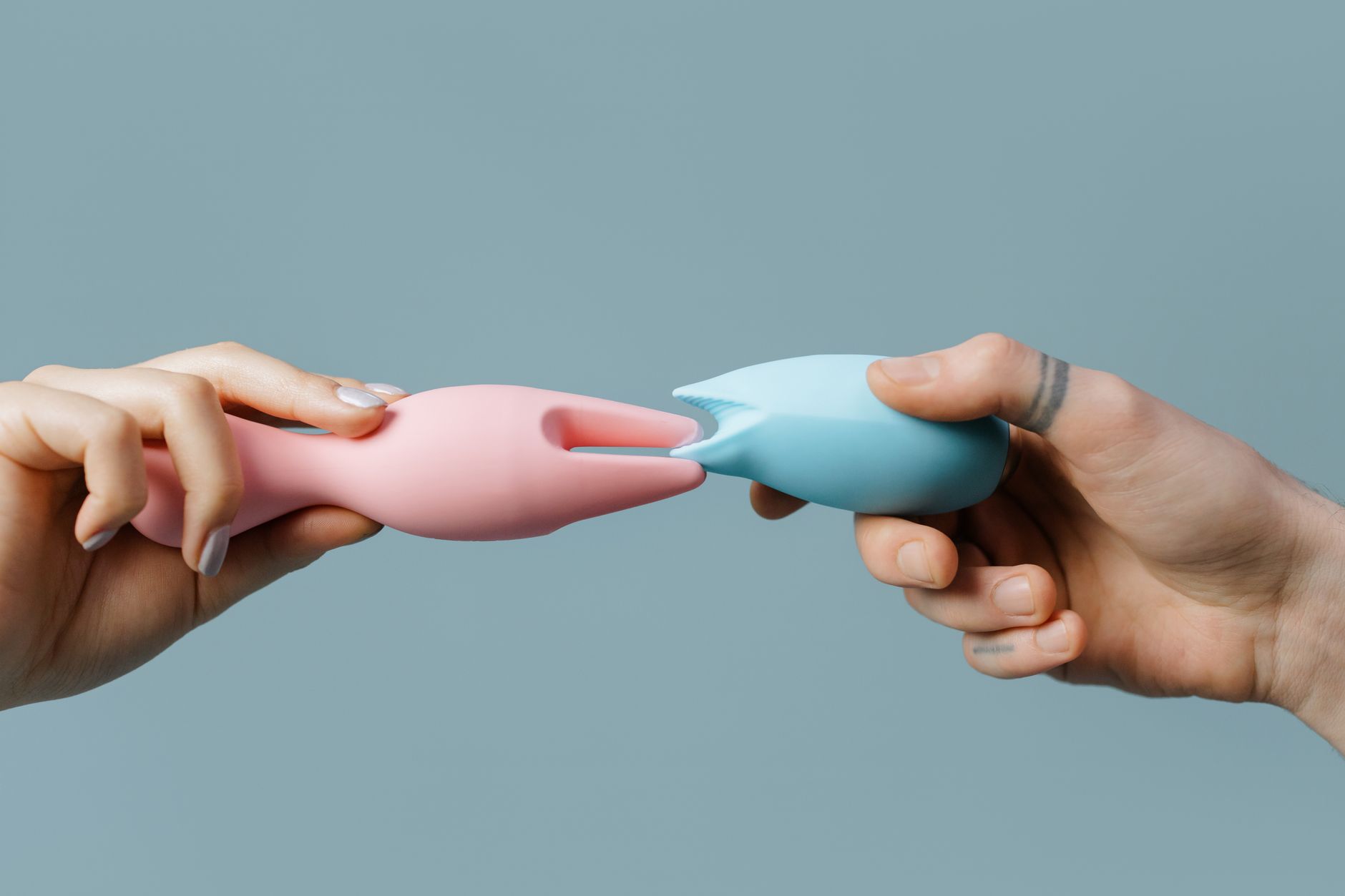
Photo by cottonbro studio on Pexels
Layer vibration with manual touch
This is the game-changer. Don't choose between your hand and the toy. Use both.
Start with your hand doing what it normally does. Manual stroking, circular motion, whatever builds arousal for you. Once you're actually turned on, introduce the vibrator at low intensity to a nearby area. Then gradually move it closer. Then let it make contact with your clitoris while your hand keeps doing its thing elsewhere.
Your brain now gets two types of stimulus at once. The familiar pressure and variation from your hand. The consistent vibration from the toy. Neither one is doing all the work. Both are contributing. Sensation compounds. You feel more because more is actually happening.
Many people find this is the moment vibrators stop feeling pointless and start feeling genuinely good.
Rhythm matters more than intensity
Once you're using the vibrator at all, stop increasing the setting. Instead, change how you use it.
Try 30 seconds on, 30 seconds off. This creates a pattern your nervous system can anticipate. Try dragging it slowly across your clitoris instead of holding it still. Try moving the toy in small circles while it vibrates. Try turning it on and off in a rhythm that matches your breath.
You're not looking for the "magic button" intensity. You're looking for a pattern that builds arousal. Rhythm and pattern are how your brain recognizes pleasure. Vibration intensity is just the vehicle.
Change your environment
If solo play happens in a rush, between other things, in a room where you're listening for footsteps, your nervous system won't cooperate. Sensation requires presence. Presence requires safety and time.
Set a real time boundary. Tell yourself you have 30-45 minutes. Silence your phone. Light a candle. Play music if that helps. Some people masturbate better in shower with warm water. Some need a clean bed and closed door. Some need a fantasy or erotic audio playing.
The vibrator isn't the center. Your full sensory experience is. A lemon vibrator works best when everything else is also working to build arousal.
Lubrication changes everything
Dry skin and vibration create friction, which feels weird and can become uncomfortable. Wet skin and vibration feel smooth and responsive.
Use a water-based lubricant, even if you're naturally lubricated. The extra slickness lets the vibrator glide instead of catching. Your clitoris can move slightly with the toy instead of being pressed firmly in place. That tiny bit of movement makes sensation feel more alive.
When sensation suddenly gets too intense
Sometimes you build arousal successfully and then the vibrator suddenly feels overwhelming. That's overstimulation, and it usually happens around 5-10 minutes of direct clitoral contact.
Turn it off immediately. Use your hand to stroke or rub without vibration. This is not failure. This is your nervous system's way of saying "I need variety." Switch back and forth. 2-3 minutes vibration, then 1-2 minutes manual. This rhythm can actually help you reach orgasm, because you're giving your nervous system novelty instead of flatness.
Reset your baseline
If vibrators have felt numb for a long time, consider taking a break. Seriously. A week or two of no vibration, just hands. Let your clitoris remember what sensitivity feels like without a buzzing distraction.
Then reintroduce the lemon vibrator using all the techniques above. Starting incredibly low. Layering with touch. Using rhythm instead of intensity. This time, your nervous system will recognize it as something worth responding to.
Your clitoris isn't broken. It's just been expecting manual stimulation. Give it time to learn a new language.
The patience part
This sounds like a lot of steps for something that should be automatic. And honestly, it kind of is. But you're retraining your nervous system to recognize and respond to a new type of sensation. That takes a few sessions, not one magical attempt.
Some people click with vibrators immediately. Some people need 4-5 tries before it actually feels good. Both are completely normal. You're not impatient or broken. You're just finding what works for your specific body.
FAQ
Why does my lemon vibrator feel numb even at high intensity?
High intensity actually causes numbness. Your nerve endings adapt to constant, strong stimulation by stopping to report it. The fix is counterintuitive: go lower, not higher. Start at the lowest setting and build from there. You'll feel more sensation at intensity 2 than you ever did at intensity 5.
Can I train my clitoris to be more sensitive to vibration?
Yes. This is exactly what you're doing when you layer vibration with manual touch, vary the rhythm, and take breaks. Your nervous system learns to recognize vibration as a type of pleasure stimulus. It takes 3-5 sessions usually. Some people need more. Patience is the actual variable.
Should I use lubrication with a clitoral vibrator?
Absolutely. Water-based lubricant makes vibration smoother and more responsive. It also reduces friction, which prevents irritation if you're using the toy for longer periods. More lubrication usually means more sensation, not less.
What if vibration still feels weird even at low intensity?
Some people's nervous systems don't respond well to vibration, and that's genuinely okay. You don't need a vibrator to have great orgasms. If you've tried the low-intensity, rhythmic, layered approach and it still feels wrong, trust that. There are plenty of other types of toys and manual techniques that will feel better.
Can I use a vibrator for too long in one session?
Yes. Most people experience overstimulation after 5-15 minutes of direct clitoral vibration. That's when sensation goes from enjoyable to uncomfortable. Build your sessions around this: vibrate for 5 minutes, switch to manual for 2-3, then back. You'll likely last longer and actually finish.
Is it normal for vibrators to feel better some days than others?
Completely normal. Arousal, stress, hormones, and how much foreplay you've done all affect how sensation registers. A vibrator might feel incredible one day and kind of meh the next. This isn't about the toy or your clitoris. It's just how responsive pleasure works. If sensation feels flat, add more foreplay, use lubrication, and lower the intensity. That usually resets things.
The point
A vibrator is a tool, not a magic wand. It works best when you understand how your body responds to it, how to layer it with other sensations, and how to build arousal intentionally. Start low. Add lubrication. Combine it with manual touch. Vary the rhythm. Give yourself time.
Your lemon vibrator isn't broken. Your nervous system just needed permission to learn something new. Once it does, sensation clicks into place. And unlike the hype promised, it's usually better than you expected.
If you want more personalized guidance on rebuilding confidence in solo pleasure or reconnecting with your body, reach out. Sometimes the gap between potential and pleasure is just a conversation away.